Swimming Pool Filtration Plant
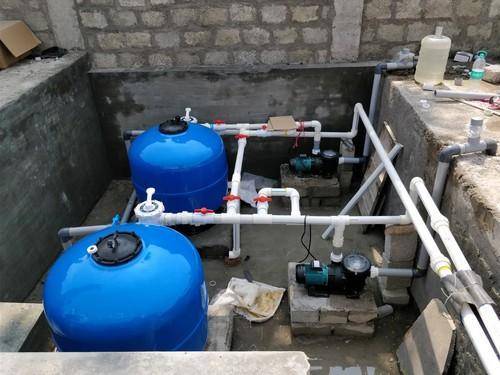
Magline Pools is a manufacturer and supplier of Swimming Pool Filtration Plants, offering filtration solutions for different pool sizes and applications. Our systems can include filtration tanks, circulation pumps, valves, piping, strainers, and other required components. We focus on proper water circulation and effective filtration to support clean and hygienic swimming pool water.
Our Swimming Pool Filtration System is used to remove dirt, suspended particles, dust, and other impurities from pool water and maintain clean and clear water quality. We provide reliable swimming pool filtration systems designed for residential, commercial, hotel, club, and institutional swimming pools.
Water Filtration Plant for Swimming Pool
We manufacture different types of Swimming Pool Filtration Plants for residential, commercial, hotel, and institutional pools. Our filtration plants are designed according to pool size, water circulation capacity, filtration requirements, usage pattern, and operating conditions to ensure efficient water filtration and consistent pool water quality.
Swimming Pool Pump and Filter Features :-
- Efficiently cleans high levels of contaminants present in the pool water
- Continuous alteration of the water to ensure pure water
- Low-cost filtration
- High capacity content for pool water filtration
- 100% leakage protection
- made with high grade316 stainless steel material to resist corrosion throughout the lifespan
- Less manpower required
Swimming Pool Filtration Plant Manufacturer
| Minimum Order | Quantity 5 Unit |
| Capacity | 10000-15000 liter/Hr |
| Brand | Magline Pools |
| Voltage | 220-240 V |
| Frequency | 50-60 Hz |
| Color | Color |
At Magline Pools, we are recognized for quality manufacturing of Swimming Pool Water Filter System, Swimming Pool Pump and Filter, Swimming Pool Water Filter Price, Filtration Plant For Swimming Pool from Ghaziabad, Uttar Pradesh, India. Several different types of filters can be used in a swimming pool filtration plant, including sand filters, diatomaceous earth filters, and Swimming Pool Cartridge Filters.
Chemicals such as chlorine or bromine are also used in the swimming pool filtration plant to kill bacteria and other microorganisms in the water. These chemicals are usually added to the water using an automatic dosing system, which ensures that the correct amount of chemicals is added to the water at all times.
What is the best filter for swimming pool?
There are several types of filters that can be used for swimming pools, and the best filter for your pool will depend on a variety of factors such as pool size, usage, and local conditions. The three most common types of pool filters are sand, cartridge, and diatomaceous earth (DE) filters.
- Sand filters: Sand filters are one of the most popular types of pool filters. They use a bed of sand to trap dirt and debris as water passes through the filter. Sand filters are relatively easy to maintain and can effectively filter out particles as small as 20 microns.
- Cartridge filters: Cartridge filters use a pleated filter cartridge to trap debris as water flows through the filter. They are effective at removing particles as small as 10 microns and require less maintenance than sand filters.
- DE filters: DE filters use a fine powder made from the fossilized remains of diatoms to coat a grid inside the filter. As water passes through the coated grid, it traps particles as small as 2-5 microns. DE filters offer the best filtration of the three types but require the most maintenance.
What is the size of filtration plant for swimming pool?
The size of a filtration plant for a swimming pool will depend on several factors such as the size of the pool, the amount of usage it gets, and local conditions. A properly sized filtration plant is essential for maintaining water clarity, hygiene, and pool health.
- Pool Size: The larger the pool, the larger the filtration plant required. As a general rule of thumb, the filtration plant should be able to circulate the entire pool volume at least once every 8 hours.
- Usage: The more people that use the pool, the more filtration capacity is required to keep the water clean and clear.
- Environmental Conditions: Local conditions such as temperature, humidity, and wind can affect the filtration requirements of a pool. For example, a pool located in a hot and humid climate may require a larger filtration plant than a pool located in a cooler climate.
- Additional Features: Pools with additional features such as waterfalls, fountains, or spas may require a larger filtration plant to accommodate the increased flow rate.
What is the size of filtration plant for swimming pool?
The size of a filtration plant for a swimming pool will depend on several factors such as the size of the pool, the amount of usage it gets, and local conditions. A properly sized filtration plant is essential for maintaining water clarity, hygiene, and pool health.
- Pool Size: The larger the pool, the larger the filtration plant required. As a general rule of thumb, the filtration plant should be able to circulate the entire pool volume at least once every 8 hours.
- Usage: The more people that use the pool, the more filtration capacity is required to keep the water clean and clear.
- Environmental Conditions: Local conditions such as temperature, humidity, and wind can affect the filtration requirements of a pool. For example, a pool located in a hot and humid climate may require a larger filtration plant than a pool located in a cooler climate.
- Additional Features: Pools with additional features such as waterfalls, fountains, or spas may require a larger filtration plant to accommodate the increased flow rate.