If you are interested in knowing more about Olympic swimming pools, including their size, depth, construction standards, and advanced features, Magline Pools provides complete guidance and professional swimming pool solutions designed according to international quality and performance standards.
Olympic swimming pools are among the most technically advanced aquatic facilities, built with precise dimensions, lane structures, water circulation systems, and depth requirements. Whether for professional sports complexes, training academies, universities, or recreational clubs, understanding Olympic swimming pool dimensions and standards is essential before construction.
What is an Olympic Swimming Pool?
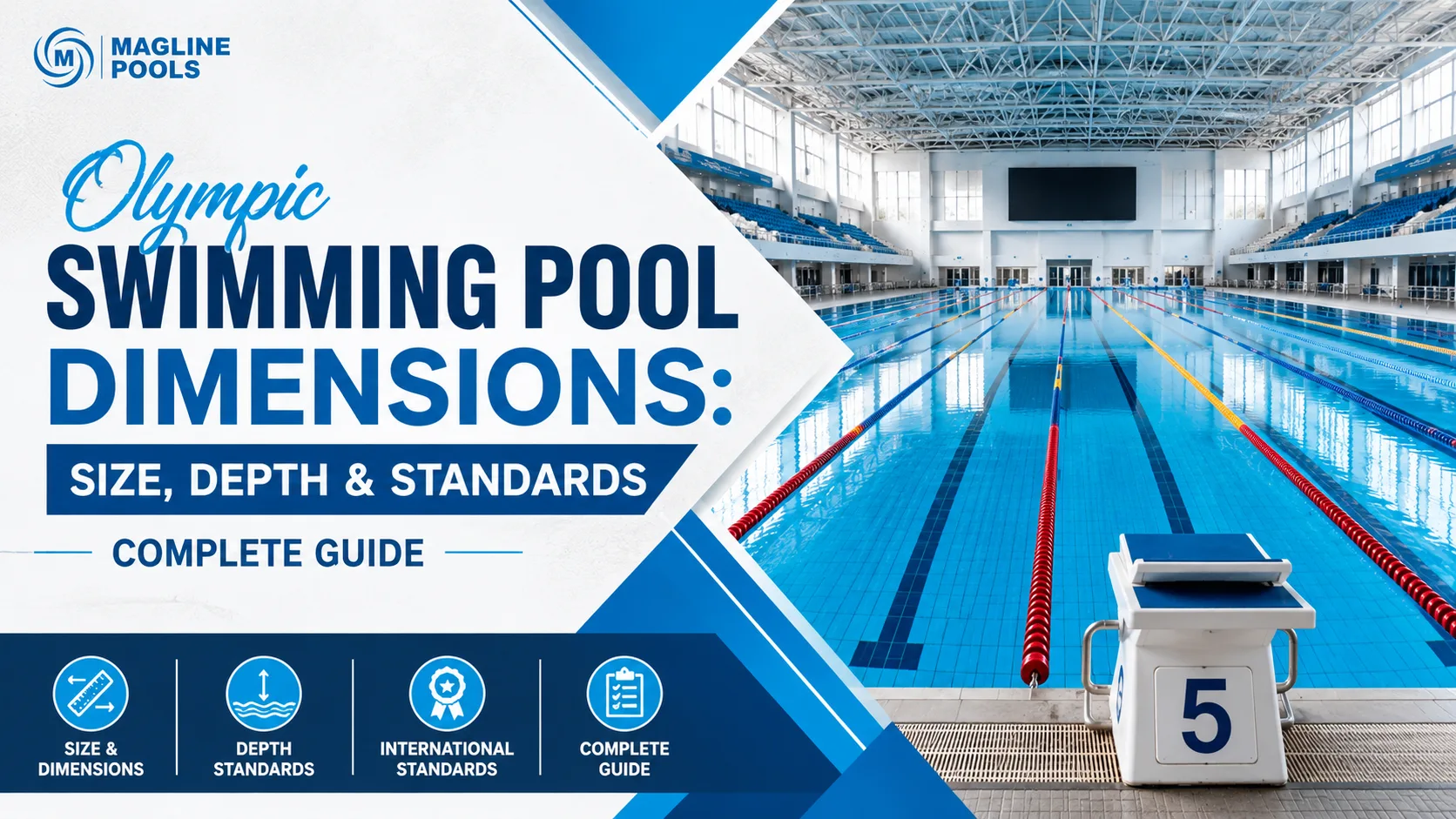
An Olympic swimming pool is a competition-standard pool designed according to international regulations established by World Aquatics (formerly FINA). These pools are specifically built for Olympic Games, international championships, and professional swimming competitions.
Olympic pools are larger, deeper, and more technically precise than regular residential or recreational swimming pools. Every dimension, lane width, water temperature, and equipment placement must comply with official standards to provide equal conditions for athletes.
Standard Olympic Swimming Pool Dimensions
The dimensions of an Olympic swimming pool are carefully regulated to maintain consistency across all international competitions.
Pool Length
The standard length of an Olympic swimming pool is:
- 50 meters long
This is known as a “long course” pool used in international swimming events.
Pool Width
The official width of an Olympic pool is:
- 25 meters wide
This width allows the installation of multiple swimming lanes along with buffer spaces.
Number of Lanes
An Olympic pool generally contains:
- 10 lanes
However, only 8 lanes are commonly used during competitions, while the outer lanes act as buffer zones to reduce wave interference.
Lane Width
Each swimming lane measures:
- 2.5 meters wide
The extra width helps swimmers perform comfortably while minimizing turbulence during races.
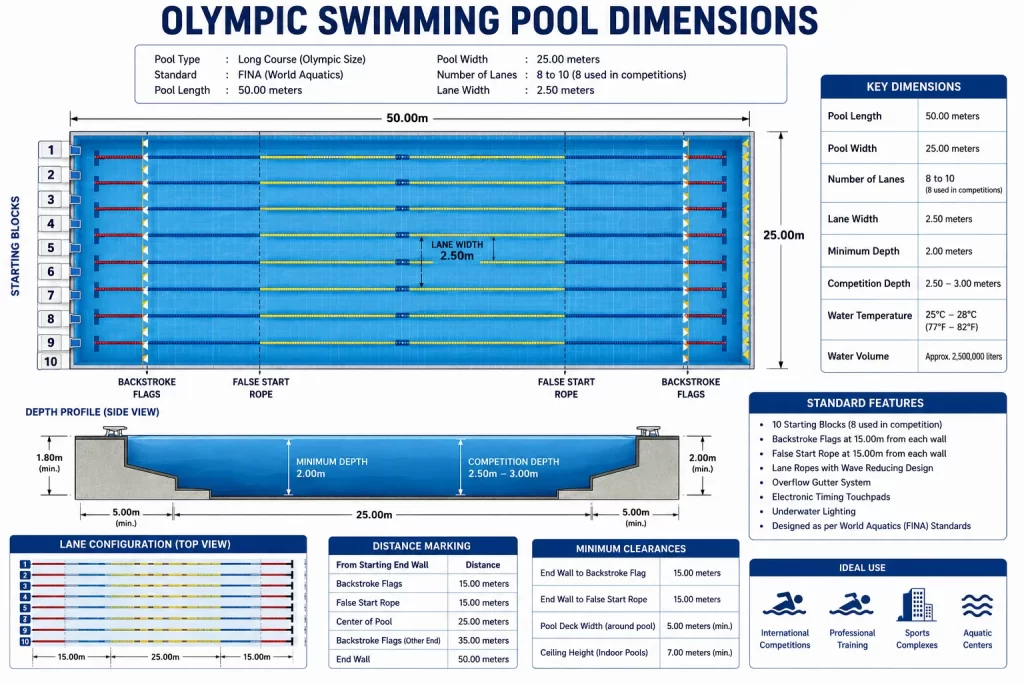
Olympic Swimming Pool Depth Standards
Depth plays an important role in swimmer safety and performance. Deeper pools help reduce water turbulence and improve swimming speed.
Minimum Depth
The minimum recommended depth for Olympic swimming pools is:
- 2 meters (6.5 feet)
Competition Pool Depth
For high-level competitions, many modern Olympic pools are built with depths between:
- 2.5 to 3 meters
Deeper water helps absorb waves generated by swimmers, creating smoother racing conditions.
Diving Pool Depth
Separate diving pools used in Olympic events require much greater depth for athlete safety. These pools can range from:
- 5 meters deep or more
depending on the diving platform height.
Water Temperature Standards
Olympic swimming pools maintain controlled water temperatures for athlete comfort and performance.
The standard temperature range is:
- 25°C to 28°C
Maintaining proper water temperature is essential for competitive swimming events and training sessions.
Olympic Pool Volume and Capacity
Because of their large dimensions, Olympic swimming pools hold a massive amount of water.
An Olympic-size swimming pool typically contains:
- Around 2.5 million liters of water
The exact volume depends on the depth and additional structural features of the pool.
Important Olympic Swimming Pool Features
Olympic swimming pools include several advanced features that improve performance, safety, and operational efficiency.
Starting Blocks
Competition pools are equipped with specially designed starting platforms positioned at the edge of each lane for racing events.
Touchpads
Electronic touchpads are installed at both ends of the pool for accurate race timing and result monitoring.
Lane Ropes
Wave-reducing lane ropes help minimize turbulence and improve swimming conditions.
Overflow Gutters
Modern Olympic pools use overflow gutter systems to control water movement and maintain stable water levels.
Advanced Filtration Systems
High-performance filtration and water treatment systems ensure clean, hygienic, and crystal-clear water quality.
Underwater Lighting
Professional underwater lighting improves visibility and enhances the appearance of the pool.
Difference Between Olympic Pool vs Semi-Olympic Pool
| Feature | Olympic Swimming Pool | Semi-Olympic Swimming Pool |
|---|---|---|
| Length | 50 meters | 25 meters |
| Width | 25 meters | 12.5 to 15 meters |
| Number of Lanes | 8 to 10 lanes | 4 to 6 lanes |
| Lane Width | 2.5 meters | 2 to 2.5 meters |
| Standard Usage | International competitions and professional training | Schools, clubs, hotels, and recreational swimming |
| Water Capacity | Very high | Moderate |
| Construction Cost | Higher | Lower compared to Olympic pools |
| Space Requirement | Large area required | Smaller installation area |
| Depth | Minimum 2 meters | 1.2 to 2 meters |
| Purpose | Competitive swimming events | Fitness, practice, and recreational activities |
Why Olympic Size Pool Standards Matter
Maintaining Olympic standards ensures fairness, consistency, and safety in professional competitions. Proper dimensions and engineering allow swimmers to compete under equal conditions worldwide.
Standardized pools also help athletes train effectively for international events without adjusting to different environments or lane conditions.
For sports academies and training centers, Olympic-standard pools enhance facility reputation and provide opportunities for hosting professional events and tournaments.
Olympic Swimming Pool Construction by Magline Pools
Magline Pools specializes in designing and constructing advanced Olympic swimming pools according to international quality standards. Our company provides complete swimming pool solutions including planning, engineering, waterproofing, filtration systems, pool finishing, and maintenance support.
Our experienced engineering team focuses on precision construction, durable materials, and advanced water treatment technology to ensure long-lasting pool performance and operational efficiency.
Magline Pools offers customized Olympic swimming pool solutions for:
- Sports complexes
- Universities and schools
- Professional training academies
- Government sports facilities
- Hotels and resorts
- Commercial aquatic centers
The company uses modern equipment, premium-grade materials, and advanced filtration systems to deliver high-quality aquatic facilities that meet professional competition requirements.
Maintenance of Olympic Swimming Pools
Proper maintenance is essential to ensure safety, hygiene, and long-term durability of Olympic pools.
Important maintenance activities include:
- Regular water quality testing
- Filtration system maintenance
- Pool cleaning and vacuuming
- Chemical balance monitoring
- Tile and surface inspection
- Drainage and circulation checks
Routine maintenance helps maintain swimmer safety and extends the operational life of the pool infrastructure.
Future of Olympic Swimming Pool Technology
Modern swimming pool technology continues to evolve with energy-efficient systems, smart automation, and eco-friendly water management solutions. Advanced filtration technologies, automated chemical dosing systems, and sustainable heating methods are becoming increasingly common in modern Olympic aquatic facilities.
Many new Olympic pools are now designed with energy-saving circulation systems and environmentally friendly construction practices to reduce operational costs and improve sustainability.
Conclusion
Olympic swimming pools are highly specialized aquatic facilities built with precise dimensions, advanced engineering, and strict international standards. From pool length and depth to filtration systems and lane design, every detail plays an important role in ensuring professional-level swimming performance and safety.
Magline Pools is a trusted provider of Olympic swimming pool construction solutions, offering high-quality design, engineering, and installation services for modern aquatic facilities. With a strong focus on quality, durability, advanced technology, and customer satisfaction, Magline Pools delivers reliable swimming pool solutions suitable for professional sports and recreational applications.